
Words by Sean Victory

In rather quick succession, Golden Apples have built, tweaked, and reworked their sound across three albums in as many years. What started as a lofi guitar-pop jamboree on 2021’s Shadowland—dialed in to a fuller sound on 2022’s self-titled release, finds them situated at present with their most cohesive release to date, Bananasugarfire. Primary songwriter, Russell Edling, invites past collaborators— musicians, and studio personnel, into this solidified version of the band. The songs tend to be more dynamic here. The tinny confines of a bedroom accommodate a solitary guitar riff, before the walls vibrate and bulge out, making way for the buzz and thump of the full band. The album is full of instances where the band toys around with space and texture, layering vocals on vocals on synths and strums that all find a sweet spot in the stereo field. With headphones on give the album another spin, and these sonic embellishments will continue to reveal themselves. After speaking with Edling, it’s clear that these aren’t circumstantial artifacts of the recording process, but deliberate instances of all members involved pitching in to find the place where their unique voices live in these compositions. If earlier albums felt like Rusell inviting his friends to play along, the songs on Bananasugarfire show that the members are done kicking the tires, and that they are ready to raise their voices in celebration, together.
Off Shelf: This is the first record that you’re working with a full band instead of it just being your own songwriting venture. So, what is that like? Is there a reason why you started working with other people? Is it just a side effect of like playing live or how did that happen?
Russell Edling: Well, I guess historically speaking, I’ve always been part of a band context, but I think with Cherry—which became Golden Apples, that was primarily my project as a songwriter. I would write the songs and then bring them to the band to execute and play live. That was kind of just the way I had been working for the last while. For Shadowland, the first Golden Apples record, that one I did totally by myself during quarantine. You know, COVID sort of situation—as a way to just kind of have something to put energy into. It was a fun project too because I never played drums before. Then the self-titled record, I wrote the songs myself and I assembled people to record them with me. So that was like a hybrid. I knew that the people that I asked to record were not necessarily going to be the live band.
But at that same time, just looking at the chronology of COVID and everything, when it became time where you could actually play shows again, that was when I started to get this band together. That band, which is, myself, Matt Scheuermann, Melissa Brain, Mimi Gallagher. Kian Sorouri was also a part of the band, and Justin Fox actually. So, we became the Golden Apple’s band together.
Then this record, Bananasugarfire, was written mostly by myself, but definitely more collaboratively with everyone else in the band, and then recorded and performed collaboratively. By the time we were recording Bananasugarfire, the band had already had enough opportunity to play together and get on a wavelength together so that I think that comes across in the recordings a lot where you can really hear, like, we know kind of where to sit in the song, and we know everyone knows where they have opportunities to bring their own thing. Everyone in the band is also in at least one other band; so everyone is really good at what they’re doing. So I feel like I want to try to give everyone room to do what they want.
OS: Yeah, I can feel different ideas flowing in and out of it a lot more fluidly than on the other records. So, when you say mostly you’re doing primary songwriting duties: you kind of take the skeleton and then sit down with everybody else; then when you’re practicing and working together, it kind of fleshes out, they kind of find the pocket that they fit in and bring their own kind of color to it?
RE: Yeah. I mean, I can be pretty, like, art… well, not articulate. Definitely not articulate. I can be pretty specific, I guess, about what I want. Like, I usually have demos that I’ve done with computer drums and all kinds of stuff like that. They’re usually pretty rough. Then once I bring that to the band—once the band hears the demo, they’re like, “okay, cool, I understand the song.” Then we kind of start over and learn it as a band. At which point we usually change structure, extend parts; you know. Then someone else will come up with a lead. Then recording is a lot of that again. Where it’s like, okay we know the songs and now we’ve recorded what we know of them; what else should we do? When you said earlier, how it’s like you kind of hear ideas like “oh let’s just record that”: that’s absolutely what’s happening. Someone’s just like, “what if we did this thing?” It’s like, let’s record it and see if it works.
OS: There’s a lot of studio gloss as well on this record too. I noticed that you work with The Bunk and places like that with the same engineer, Matt Schimelfenig. I’m sure there’s some familiarity there, but on this one, did you spend a little bit more time playing with those ideas?
RE: There is so much of that. We recorded the drums with our friend Zack Robbins at a studio here in Philly called The Metal Shop. Zack is just such a pro. He also is someone I really respect, you know, his aesthetics and everything. So it was just a really good pairing there. Once we had that, then I took those tracks and basically just played around with them for a long time in my basement; which is where I do all of my recording. So it was definitely a ton of tinkering around and playing with stuff. Using tons of pedals on everything and then start over again and that’s the whole thing.
OS: It seems like guitar and gear are important, signature parts of your sound. Were there any particular pieces of gear/guitar pedals/whatever that you found inspiring, or really connected with during these sessions?
RE: Yeah, there’s one piece of equipment I think of first. It’s this Wurlitzer. It’s called the Music Learning Module. It’s like a kid’s keyboard, and mine is this beautiful baby blue. You can’t change the sound at all. It just sounds like Tone. You can control the volume—obviously there’s a volume, but it’s super simple. My friend Kian— who was in the band for a while—he had one and we would use it for a song or two of our set when we would play shows. Then when we were on our tour last year, he was like, “there’s one of those for sale on Craigslist. You should check it out.” So, I messaged the guy who’s selling it. He was in New York and we were going to play in New York, so when we played, I was going to pick it up. When we got there, he ended up basically giving it to me for free. He was so sweet about it. He was like, “I got this for my daughter to learn piano, but she doesn’t really want to learn piano on this. She wants to learn piano on a nicer sounding piano. So, I got her another keyboard. If you want this, if you’re interested in this thing, you should just have it, but just make sure you use it. You should use it to make music.” I was like, “I will.” It was such a sweet little vignette of just generosity and human kindness. This guy was like, “you know what, just take it. Just take it and make something cool with it.” I found that that keyboard sounds really cool if you crank it.
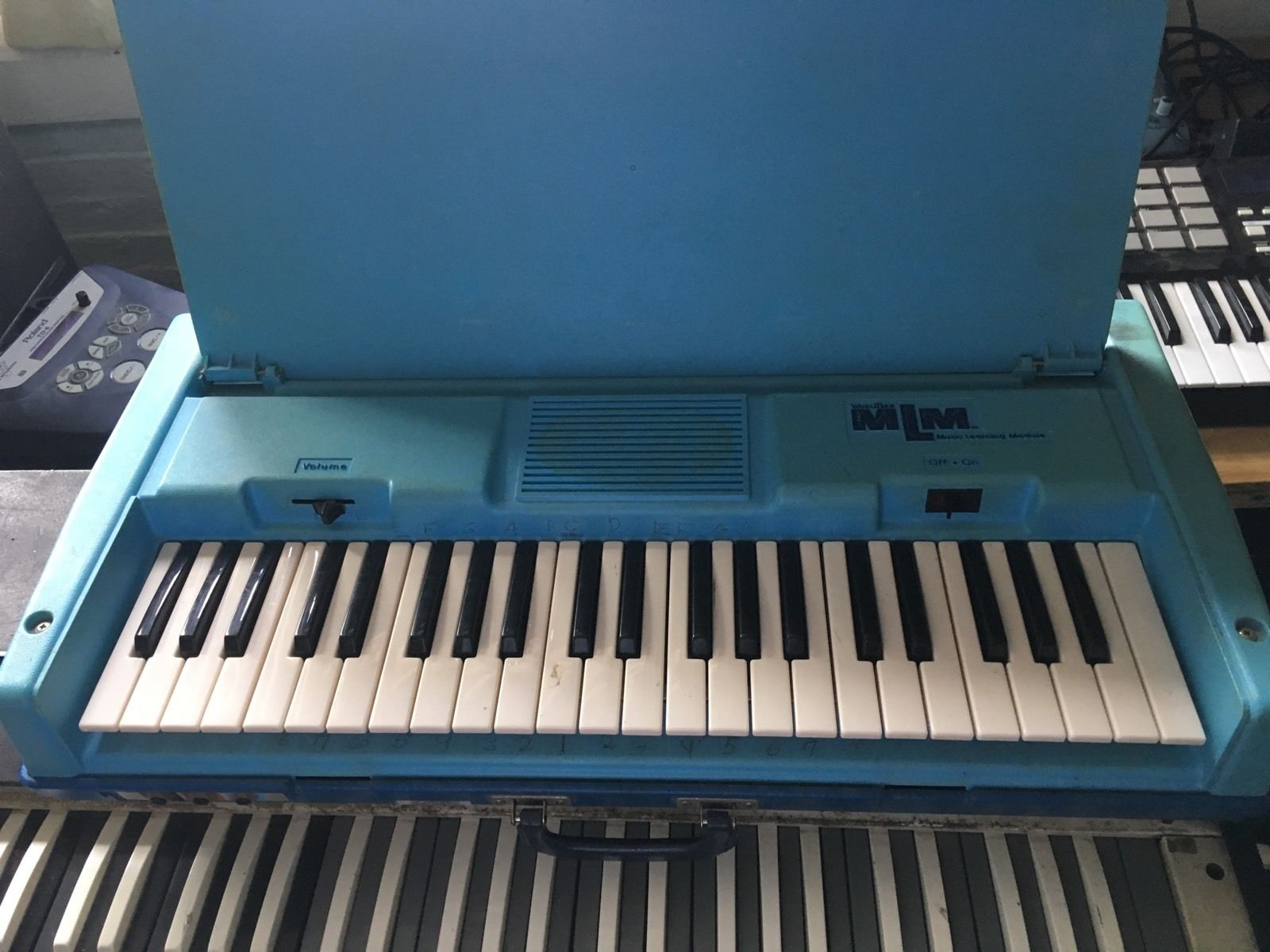
I have an old Tascam mixer that I basically run everything through and the overdrive that happens with that thing is the most beautiful. When you change chords, you can feel this like huge vibration just shifting and morphing. It feels so physical and I just fell in love with that sound. I would just play that keyboard all the time. That’s basically how we wrote the song “Sugar Fire”: just playing around with these chords and with a drum loop and I ended up using the Wurlitzer on a couple songs. It’s on “Waiting for a Cloud”. It’s on “Materia” and it’s on “Sugar Fire”. It had that story behind it, and I feel that positive energy was present in the in the recording.
OS: I mean it’s pretty good deal. They’re like, “Take this to make music with!”
RE: I found our email exchange when the record came out and I emailed him. “Hey, don’t know if you remember me, but you like gave me this keyboard. It’s really cool and you said under one condition: just make music with it.” I don’t know. It’s just really nice to be able to make good on my promise.
OS: When you were working on this record, were there other areas in which you gathered inspiration for writing. Whether naturally, just sort of as it comes by or deliberately. Like books or art, anything; other things in mind that you had that helped you feel inspired while you were creating?
RE: Absolutely. I mean, I remember watching this Werner Hertzog documentary about volcanoes [Into the Inferno]. There was this one scene that cut to this community. It was like a party of this group of people, you know, somewhere where there was a volcano nearby and it was like they were living in constant threat of destruction by this volcano. But the scene was this pure celebratory moment and they were all just like singing and dancing. That juxtaposition of jubilation and, impending doom—I just felt that a lot. I remember just like thinking about that feeling and that scene when I was writing, Waiting for a Cloud, just this push and pull between, I want to find happiness in this space that sometimes feels really dangerous to me, you know?
I have this book by Lester Bangs, a collection of his articles and stuff called Psychotic Reactions and Carburetor Dung. I was reading that and there was this review—if you want to call it that, about Van Morrison’s Astral Weeks record. He was able to convey the spirit of Van Morrison’s lyricism and the way his vocal melodies are so fluid and organic and reactive. I don’t remember what song it was—it might have been “Little Bronco,” but I remember being like, “Wait, I have a concept for how I want to approach writing, re-writing this vocal melody.” Then I took that feeling and that inspiration and just totally changed the way that the song was going.
It’s cool because I feel like in the past I haven’t really been that influenced by just things and feelings like that. It’s usually I’ll sit down with guitar and start writing and I’m like, “Oh, that’s kind of a cool chord thing,” or “That riff is kind of cool. I’m gonna write about how that makes me feel right now,” or whatever, but some of these songs just felt a lot more like they appeared cosmically or something like that.
OS: You mentioned COVID earlier as being something that you kind of used to kickstart. While you’re in isolation you’re already working on all this stuff kind of as reaction to the insanity that’s going on outside. Do you think that that’s something that made you more attuned to these other things? You’re stuck in there and so you’re trying to let things in, right? Maybe you were more receptive because of that?
RE: Yeah, I have to assume so. Because I think during that time there was so much cut off. So much information was not coming in. There was such an abbreviation of experience, you know what I mean? It was so starved.
I think that within that space, I very much so reverted to child-like tendencies of building things out of Legos. I was essentially just creating realities with what I had. I’m a pretty introverted person, and it was really good for me. It was a horrible, horrible, horrible time. It was scary, I have a compromised immune system and everything. I was definitely horrified and terrified the whole time, but it was also really nice to just be like, there are no variables here except for what I make and what I decide to do with my time. I think through that, I maybe developed the ability to be more communicative with music than I used to be. I think I developed that skill of like, oh, music is a way that I can express myself in a way that it wasn’t possible before, you know, it was almost like a bootcamp, I think, in a weird way.
OS: When I was reading your press release, there was something you said about how you’re afraid of saying something that’s just openly positive in a song because it’s just not the type of thing that people respond to anymore. When you decided to let there be a little bit of hopefulness in your creative output, what did that look like? How did you open yourself up to that and change your mind and take that risk? There’s always somebody out there who’s going to want to knock somebody down a peg.
RE: Yeah, I mean, I think about this all the time. I think that it feels so corny to be like, let’s “love your brother, and get along with everybody and, be nice.” Like, it feels so lame, you know, because then someone could say one thing, so simple, like, “yeah, well, what about this?” And you’re just like, “oh, you’re right, I shouldn’t be so naive.”
Ultimately, I think the change that happened in my mind is that it is understood every song and every idea that I can put out there is with the absolute understanding that to exist is to suffer. The suffering is obvious. That is the standard. The lowest common denominator. So if we all know that there is endless horror constantly, what is going to help people? Is it just to commiserate into perpetuity? Even if it is escapism, why not just be nice? Why not just try to say, yeah love is a beautiful thing and you know, it’s good and it can help. It occurred to me that if you’re not going to say something nice, don’t say anything. I’ve been trying to make that a part of my actual life behavior. It’s hard to do in real life when you’re just confronted with something and you react, but I’m trying to be a more kind person. I’m a pretty privileged person in a million ways, and I think that the least I can do is just be kind, you know? Stay out of the way when I need to and just be nice. Don’t be a problem. Don’t make things complicated. Just be cool, basically.
OS: I think it is somewhat reactionary to the times we’re living in. Obviously things are pretty dark. The worst things get the most attention and it can become stressful on anybody. So it does feel like a risk to just be positive in spite of that. Ultimately, when you think about it, again back to basics. You can’t say something nice don’t say anything at all. You’re right it makes perfect sense.
RE: Like it almost feels irreverent. It feels rebellious to be like “I love you,” or I’m just gonna dedicate three and a half minutes to talking about how cool my friends are. That feels like punk rock in 2023.
OS: Along those lines, you’re from Philadelphia. I don’t know a ton about the music scene there. You mentioned some of your band mates are in other bands and other creative outlets. So are there any particular groups that you chum around with or people or artists that you hold in high regard that you’d like to talk about at all?
RE: When I look at all of our friends and our bands I can just so quickly draw lines to Elephant Six. Matt Schimelfenig has worked with us over and over again with recording. He has a great project called Memory Town. He’s in a band called Gladie, which is great. We have all these different bands that all share members. We all record with Matt or with Zack Robbins, folks at the Metal Shop. It’s really cool just to see all these moments of overlap. Our bassist—another Matt, he has a band called lowercase roses. One of the things that he’s working on with his new recording is he’s gonna record songs with all these different people. So he wants to record a song with me. He’s recorded a song with Ian Farmer at the Metal Shop. He wants to record with Tim Jordan from Sun Organ. There are just so many bands within this cluster, and it feels really cool.
The record release show that we’re having on Friday is great because it’s this band Goshupon, which is Kian—who I mentioned used to be in Golden Apples, it’s his project. Amanda X is playing, and that is our drummer’s other band. Then this band called Snowhore is playing and that’s who usually plays with Greg Mendez, who is another friend of ours. So that show in and of itself is just going to be this total personification of this whole thing.
The thing that’s so funny about Goshupon, basically the concept is every time they play a show there’s a new lineup. At this point he has been playing shows with Goshupon, for like a year, I guess, and he’s had 16 different lineups. Like, can you imagine that? You know, how hard it is to just get anybody to show up to practice?
OS: That’s a cool endeavor though. I mean, the idea there seems—at least to me, like, that he’s capturing a collection of people, and people involved in a scene that you’re close to.
RE: Yeah, it’s really cool. I feel really lucky to be a part of this community and just surrounded by all these people that are so good. Like if there’s ever a question that I have about anything music related, I know there’s someone very close by that I can just be like, “If I wanted to do this, how do you do that?” Or like, “when you did that, when you played that show, like, what was that thing you were doing?” It feels really nice to have that, and I think it’s really easy to take it for granted. I know that if I, listened to some parts of myself that are like, “move to Maine and live in the middle of nowhere!” I would just miss it like crazy. I would feel totally lost.
OS: You’re busy in that you’ve been putting out a record year-over-year. What’s on the horizon, do you have anything coming up for the rest of the year, or next year?
RE: Yeah, we have this record release show on Friday in Philly, and that’s the beginning of a six show tour. We’re just going down to Atlanta and back, which will be cool. That’ll be interesting because it’ll be the first time we’ve been playing out for a little while—certainly since the record came out. We’re going to play a bunch of places that we’ve never played before. We’re playing with a lot of great bands. I’m really excited about that. We’re doing that tour, and then we have a couple of shows for the rest of the year, and then nothing locked in for next year, but my phone is starting to fill up with voice memos again. So I think I’m going to start working on another thing at some point. I don’t think it’s going to come out next year. I think it’s going to be a 2025 thing. Because I think that fatigue is a very real thing. Like Thee Oh Sees or John Dwyer projects that release like, I don’t know, what, like two records a year if you add up all the projects? Not trying to do that. But, you know, I just feel like, if the ideas are there, you know, why not?
OS: Is there anything else you want to talk about or any other things that you wanted to circle back on?
RE: No, I think that’s kind of all I have really. I can’t stress enough how much I’m grateful for everyone in the band. It’s been really cool to be able to play music with them. We went bowling a couple weeks ago to sort of celebrate the record coming out. We were sitting there talking and everyone was like, “I feel like we all got better at our instruments” and it was just a really sweet thing. It’s moments like that that I feel validated the most. The people that I care about the most are feeling good about this and that makes me feel really good, you know. Because it’s working and we’re having fun.